

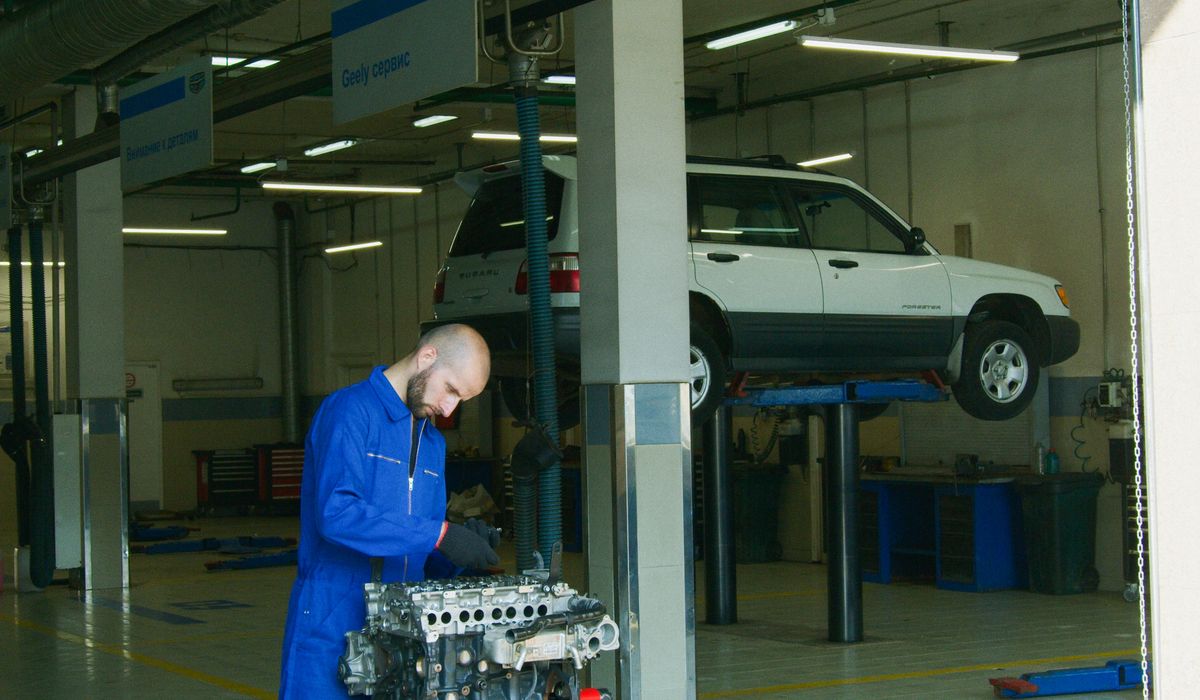
Why an Annual Service Still Pays Its Way
If you drive in Sheffield, your car works harder than the average. The climb out of the Don Valley, the stop-start crawl along Penistone Road, the grind up to Crookes in second gear — it all adds up. An annual service is the cheapest insurance you can buy against a breakdown on the Parkway at 8am on a Monday.
Plenty of drivers skip a service when money is tight, reasoning that the car "seems fine". The trouble is that most failures announce themselves quietly, months before they strand you. A weeping coolant hose, brake pads down to two millimetres, oil that has turned to sludge — none of these give you a warning light until the moment they become expensive. A service catches them while they are still a £40 job rather than a £400 one.
There is also the fuel economy angle. Fresh oil, clean filters and correctly gapped plugs can return two or three miles per gallon on a typical commute. Over 10,000 miles of South Yorkshire driving, that is a real saving, not a token one.
What Your Mechanic Actually Checks
A full service is far more than an oil change, though the oil change is the part most people picture. A competent garage will work through a checklist that covers safety, reliability and efficiency. Typically this includes:
- Engine oil and filter — replaced, with the correct grade for your engine. Using the wrong oil is worse than using old oil.
- Air, fuel and pollen filters — clogged air filters sap power; pollen filters matter if you suffer hay fever on the school run.
- Brakes — pads, discs, fluid level and condition. Sheffield's hills are brutal on front brakes.
- Tyres — tread depth, pressures and signs of uneven wear that point to tracking or suspension problems.
- Cooling system — coolant strength, hoses, radiator and water pump for leaks.
- Battery — tested under load, because cold South Yorkshire mornings expose a weak one fast.
- Steering and suspension — ball joints, track rod ends, shock absorbers and bushes, all vulnerable to potholes.
- Lights, wipers and washer fluid — the simple things that fail an MOT.
- Diagnostic scan — reading stored fault codes before they become warning lights.
If your car is due its MOT, it makes sense to book both together. Anything the service flags can be sorted before the test rather than costing you a retest fee.
Sheffield Conditions Take Their Toll
Living where we do puts specific demands on a car, and a good service should reflect that. Gritted roads from November to March mean salt spray working its way into brake lines, subframes and exhaust mounts. It is worth asking your garage to check underneath and to wash the underside properly through winter.
Our potholes are another matter. Hitting one hard on Abbeydale Road or the ring road can knock your tracking out, bulge a tyre sidewall or damage a wheel bearing. If the steering feels vague or the car pulls to one side, mention it at the service rather than waiting for the next one.
Short journeys are the third factor. If you mostly nip between home and the shops, the engine rarely reaches full temperature. That allows condensation to build up in the oil and exhaust, which accelerates wear. If most of your driving is short hops, an annual service is not optional — it is essential, and a fortnightly run out to the Peak District will do the car a power of good.
Protecting What Your Car Is Worth
A stamped service book is one of the few things a buyer can verify. When you come to sell, a full history with receipts can be worth several hundred pounds compared with an identical car with gaps in its record. Buyers in Sheffield are savvy; they will walk away from a car with no paperwork, and the ones who stay will knock you down on price.
Keep every invoice in a folder, note the mileage on each, and keep the MOT certificates too. It takes five minutes and it pays for itself many times over.
Warning Signs Not to Ignore Between Services
An annual service does not mean you can ignore the car for the other 51 weeks. Book it in sooner if you notice any of these:
- A new noise over bumps, or a knocking when you turn the wheel
- Brake pedal feeling soft, spongy or travelling further than usual
- Any warning light that stays on after the engine starts
- Coolant or oil needing topping up more than once between checks
- Vibration through the steering wheel at speed
- A clutch that slips on hill starts — common around Walkley and Stannington
Getting the Most From Your Service
Book ahead rather than waiting for a problem, and be specific about what you have noticed. A short list of symptoms helps a mechanic enormously and saves diagnostic time you end up paying for.
Ask for the old parts back if you are unsure whether a job was needed — a reputable garage will have no objection. Check tyre pressures monthly and top up your oil and screenwash yourself in between visits; it takes ten minutes and shows you care about the car.
Finally, build a relationship with one garage you trust. A mechanic who has seen your car for three years will spot a change in it far sooner than someone new every time. In a city of hills, salt and potholes, that continuity is worth more than any loyalty card.


Coding is used in almost all aspects of life and work now, be it directly or indirectly. It’s not just for companies in the tech sector. “An increasing number of businesses rely on computer code,
Coding is used in almost all aspects of life and work now, be it directly or indirectly. It’s not just for companies in the tech sector. “An increasing number of businesses rely on computer code,
Coding is used in almost all aspects of life and work now, be it directly or indirectly. It’s not just for companies in the tech sector. “An increasing number of businesses rely on computer code,